Blog
A New Era for USPS: Five Pressing Challenges Facing Commissioner Steiner


On August 10, 2025, David Steiner officially succeeded Louis DeJoy as the 76th Postmaster General of the United States Postal Service (USPS).
This date marks more than just a personnel change—it signifies a historical milestone: this 250-year-old institution embarks on a new course filled with uncertainty and opportunity.
But let’s be realistic—this new era will not be smooth sailing. Steiner faces the legacy of his predecessor’s reforms and years of internal challenges.
As a longtime observer of USPS policies and industry dynamics, I believe Steiner’s top priorities after taking office are at least five things.
1. Financial difficulties: the hard bone of structural losses
Financial matters are the USPS’s biggest concern.
Although the 10-year “Delivering for America” plan has eased the situation somewhat, massive losses remain.
on financial reports isn’t day-to-day operations, but the massive liabilities associated with retiree healthcare and pensions, which make the financial statements look several orders of magnitude uglier each year.
Spiraling costs: As inflation drives up costs for wages, fuel, maintenance, and more, the USPS is forced to walk a tightrope between efficiency and service.
My judgment: Steiner will use his experience in financial restructuring in the private sector to continue to “slim down,” but to solve the problem fundamentally, he may have to get Congress to relax on the issue of welfare debt.
2. Package Torrents vs. Aging Networks
The rise of e-commerce has ushered in a “golden boom” in the USPS’s parcel business, but it has also pushed its outdated logistics network to its limits.
Outdated infrastructure: Many sorting centers were built for letters and are overwhelmed by today’s flood of parcels.
The battlefield of the last mile: Amazon, FedEx, and UPS are all vying for territory, and price and reliability have become the lifeline of USPS.
My judgment: Steiner may accelerate automation and infrastructure upgrades and may also establish deeper cooperation with large e-commerce companies in exchange for a stable package volume.
3. Employees and unions: rebuilding trust
Postal workers are the backbone of the USPS, but they’ve been under tremendous pressure over the past few years.
Side effects of the reform: cutting services and adjusting processes—it sounds like efficiency optimization, but in practice it makes front-line staff feel suffocated.
The complexity of labor-management relations: multiple unions, cyclical negotiations, and politics no less arduous than Capitol Hill.
My judgment: If Steiner wants to stabilize the team, he needs more than just concessions at the negotiating table. He also needs to improve the working environment, provide better tools, and make employees feel “supported.”
4. Fleet Modernization and Electrification
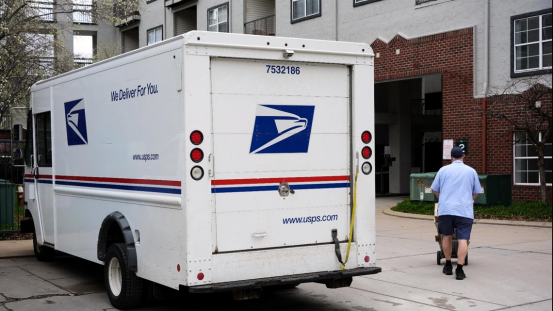
That familiar Grumman LLV has been in service for decades—it’s the USPS’s hallmark but also a symbol of its age.
Environmental protection and political pressure: The Biden administration’s push for electrification of the federal fleet presents both an opportunity and a test.
Investment and choice: Should we continue to purchase some gasoline vehicles or go all-in on electric vehicles? This is not only a cost calculation but also a political signal.
My judgment: Steiner will likely increase the proportion of electric vehicles but will share the investment risk of charging infrastructure by cooperating with private companies.
5. Balancing Public Mission and Commercialization
The uniqueness of USPS is that it is both a business and a public service agency.
The contradiction between price and service: raising prices can ease financial pressure, but declining service standards will cause public dissatisfaction.
Regulation and political intervention: Oversight by Congress and the Postal Regulatory Commission means that commercialization reforms are difficult to achieve across the board.
My judgment: Steiner will emphasize “service first,” offset cost increases through efficiency and technological innovation, and try to avoid the unpopular path of frequent price increases.
Summary: A high-pressure relay race
Steiner’s succession isn’t a simple “changing of captains,” but rather the helm of a ship navigating stormy waters.
Financial difficulties, aging infrastructure, employee trust, fleet upgrades, and the balance between public and commercial interests—these five major challenges are each daunting and intertwined.
His tenure will be filled with neither pressure nor opportunity. The full extent of his success or failure may only become clear in a few years.