Blog
The Underground Railroad Forever Stamp: A tribute to America’s long road to freedom.

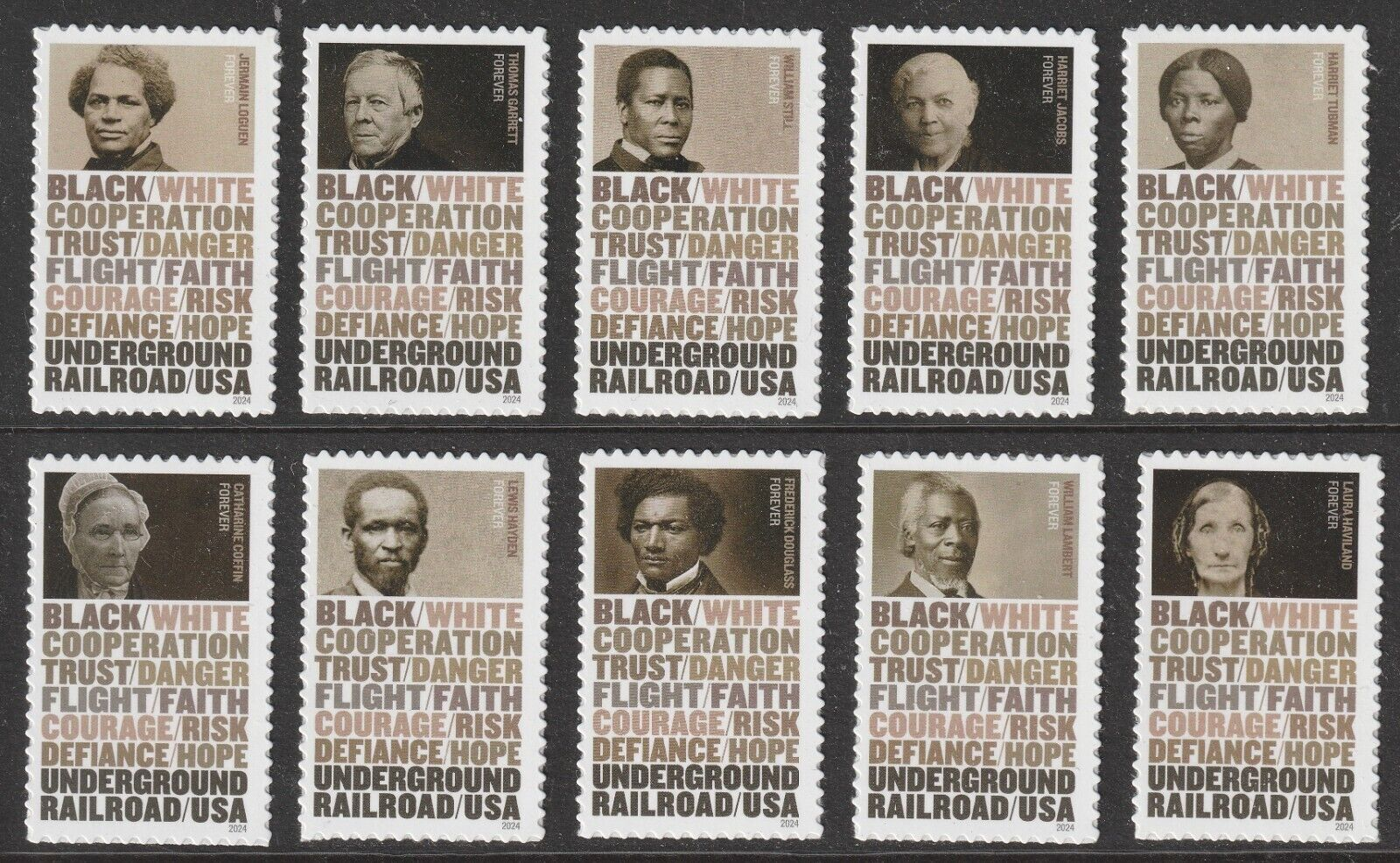
Sometimes, a small stamp can carry a story far exceeding its face value.
In March 2024, the United States Postal Service (USPS) launched the “Underground Railroad Forever Stamp,” a stamp imbued with historical and emotional weight.
It is more than just a stamp; it is a letter to history—a tribute to those who lit the light of freedom for others in the darkness.
The Forever Stamp was officially released on March 9 in Church Creek, Maryland. That day marked more than a century since Harriet Tubman led slaves to freedom, but her footsteps, faith, and courage are still quietly conveyed in the moment every letter is sent.
A commemoration born of courage
This “Underground Railroad Forever Stamp” belongs to the USPS’s commemorative Forever Stamp series. It not only commemorates a piece of history but also expresses a belief in the enduring power of freedom.
The concept of the Forever Stamp itself is highly symbolic—its postage validity never fails, regardless of changes in postage rates.
This is remarkably similar to the ideal of “freedom”: true freedom should not be diminished by time, laws, or changes in power.
The launch ceremony was held at the Harriet Tubman Underground Railroad Visitor Center in Maryland. It was a fitting location—on that land where Tubman had risked his life countless times to lead enslaved people to the North. Today, the USPS’s choice to release the Forever Stamp here is like telling everyone: the journey to freedom will continue.
Design and Symbolism: A Silent Cry
The design for this Forever Stamp was handled by renowned art director Antonio Alcalá.
Instead of grand narratives or dramatic imagery, he opted for a minimalist composition in shades of brown—using word pairs to express the tension of the Underground Railway spirit:
“Black/White,” “Cooperation/Trust,” “Danger/Faith,” “Courage/Risk,” and “Rebellion/Hope.”
Each pair of words is like a slice of the human heart in that era.
They are contradictory yet interdependent. Without trust, escape will fail; without hope, resistance loses its meaning.
The entire design evokes the old saying, “True power often lies in silence.”
This perfectly encapsulates the Underground Railroad—it’s not a grand, earth-shattering war, but a hidden, silent network of action. Its courage is concealed in the darkness, trust, and a sense of direction.
Underground Railway: Routes and Starlight in the Night
The “Underground Railroad” was not a real railway but a network of hundreds of safe houses, secret passages, churches, and barns.
In the 19th-century American South, enslaved African Americans used this secret network to escape north.
Those who offered shelter were called “stationmasters”; those who guided them were called “conductors.”
They had no maps, no modern communication—only signals, codes, and songs.
Some used the patterns on their blankets to find their way; others looked up at the stars, using the North Star to discern the path to freedom.
Between 1810 and 1860, it is estimated that tens of thousands of people gained their freedom through this “railway.”
And almost all of these actions were carried out “illegally.”
Therefore, the Underground Railway was not only an escape route but also an experiment in moral courage.
It showed people that even in the darkest times, there are those willing to be a beacon of light.
Ten heroes, faces of freedom
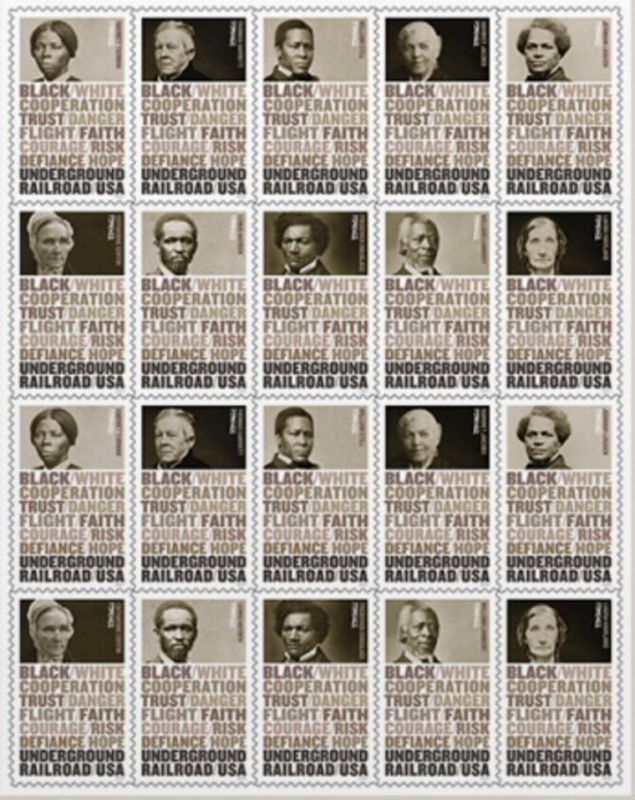
This Underground Railroad Forever Stamp series also commemorates ten historical figures who symbolize courage and sacrifice.
Harriet Tubman: The most famous “conductor,” she led over 70 slaves to escape the South. Later, she also became a Union Army spy and nurse.
Frederick Douglass: From a runaway slave to a renowned speaker and author, he was a leading figure in the abolitionist movement.
William Still: Known as the “father of the Underground Railroad,” he documented hundreds of escape stories in Philadelphia.
Thomas Garrett: Helped more than 2,700 people seeking freedom and is considered one of the greatest white allies.
Laura Haviland: Organizes rescue operations and establishes schools for fugitives.
Lewis Hayden: He once threatened to blow up his own house rather than hand over the fugitives he sheltered.
Jermain Loguen: He built a large underground railroad station in Syracuse, New York, and was known as “the King.”
William Lambert: Organized a “secret black society” in Detroit, providing resources for fugitives.
Katherine and Levy Coffin: Managers of Indiana’s busiest site, sheltering more than 2,000 people.
Harriet Jacobs: Her memoir, “The Life and Anecdotes of a Female Slave,” became an important chapter in abolitionist literature.
These people weren’t all warriors; some were teachers, some were pastors, and some were ordinary mothers.
But in them, you see the same quality: the courage to stand idly by.
And that’s precisely what Forever Stamp wants us to remember.
Educational and Cultural Value: Small Stamps, Big Classrooms
The Forever Stamp is more than just a collectible; it’s an educational tool.
Teachers can use it to begin lessons about slavery, resistance, and moral courage.
Museums also incorporate it into their exhibits, using this “miniature work of art” to tell grand social stories.
At the Harriet Tubman Visitor Center and the National Museum of African American History and Culture,
this set of stamps serves as a bridge connecting the past and the present—
reminding us that history is not an exhibit, but a mirror.
This release coincides with Black History Month.
symbolizing the USPS’s continued focus on equality, civil rights, and cultural memory.
Each Forever Stamp is like a lesson in civics without a textbook.
helping the younger generation understand that freedom is not an inherent privilege but an effort passed down through generations.
Timeless value, enduring legacy
The name “Forever Stamp” itself signifies “permanence.”
No matter how much postage rates rise in the future, it can still be used to mail a first-class letter.
This system design also implicitly symbolizes that
The values of justice and freedom should not depreciate over time.
Today, collectors like the Mystic Stamp Company
offer commemorative display panels and limited-edition booklets featuring the “Underground Railroad Forever Stamp.”
For collectors, this is not just a work of art but also a form of cultural heritage.
Conclusion: Let freedom continue to be sent out
Stamps are the smallest yet most ubiquitous national symbols.
The Underground Railroad Forever Stamp,
However, it is a letter sent to history and a promise made to the future.
It reminds us of those nameless heroes, those forgotten footprints.
It also reminds us that today’s “freedom” comes from the silent sacrifices of countless people.
When you affix this Forever Stamp to an envelope,
the letter itself may not matter—
What matters is that it quietly conveys a belief:
The story of freedom should never cease to be told.
Frequently Asked Questions (FAQ)
Q1: When will this Forever Stamp be released?
A: It will be officially released on March 9, 2024, in Church Creek, Maryland.
Q2: Who designed the Forever Stamp?
A: The designer is Antonio Alcalá, known for his minimalist designs and symbolic words.
Q3: Why is it called a “Forever Stamp”?
A: It represents that no matter how postage changes, it can always be used for first-class mail—symbolizing the eternity of freedom.
Q4: Which figures are commemorated on the stamps?
A: Ten Underground Railroad heroes, including Harriet Tubman, Frederick Douglass, and William Still.
Q5: Where can I purchase it?
A: You can obtain it through store.usps.com or your local post office.
“Every Forever Stamp is a tribute to history.”
It reminds us that true freedom is not just about acquiring it, but about being protected and passed down from generation to generation.