Blog
The cultural significance of the Saul Bellow commemorative stamp

“Sending a letter with him is like sending a piece of American literary history”
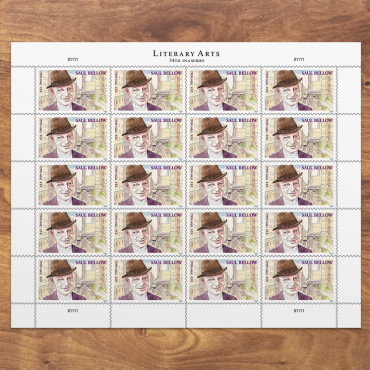
When Regina Aikens, customer relationship manager of the First District of Illinois, gently lifted the red velvet, Saul Bellow’s insightful eyes gazed at the world again – this time on a stamp. On February 6, 2024, this literary giant achieved immortality in the most American way: becoming the 34th person selected in the “Literary Arts” series of stamps of the United States Postal Service, completing a literary ritual that transcends life and death at the Hyde Park campus of the University of Chicago where he studied and taught.
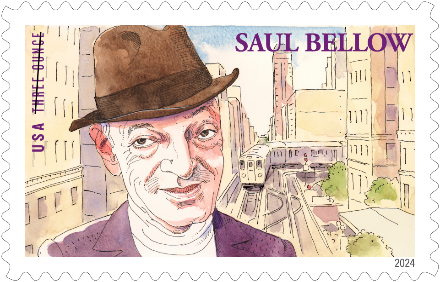
The stamp’s image of Bellow was lifted from a photograph taken in 1982. The charm of this “last giant of the golden age of American literature” was engraved on the stamp by illustrator Joe Ciardiello using pen, ink, and watercolor. The Chicago “L”-shaped elevated train that towers over the scene is the most beautiful element. Bellow referred to this city as “my spiritual laboratory,” and it will always be associated with its literary recorder. Similar to Bellow’s depictions of souls straining under the weight of material civilization, art director Ethel Kessler’s design blends the icy rail lines with the ink strokes.
“In the midst of the bustle of contemporary cities, he taught us how to preserve the dignity of thought.” Gabriel Richardson Lear, a professor of philosophy, stated during the unveiling ceremony. With books like “The Adventures of Augie March,” “Herzog,” and “Humboldt’s Gift,” the only novelist to win the National Book Award three times, he fostered American literature. Tens of millions of letters will now carry his ideas across the continent of North America.
Selecting letters bearing Bellow’s stamps is essentially a protest against fast fashion. The words from “Henderson the Rain King” appear to flash when this stamp featuring the Chicago skyline is applied: “People spend their whole lives trying to prove that they are more than just a name on the mailbox.” In the most poetic way possible, Bellow is now the name on the mailbox.
The Chicago “L” train thundered by as usual on the day the stamp was unveiled. Through the car windows, the ghosts of the professors, tramps, and newsboys who starred in Bellow’s novels might be observing this university ceremony. “This is not the end of commemoration, but the birth of memory,” as Professor David Welberg once stated. From Chicago to any location where literature is still needed, Bellow’s description of “America that is both cruel and full of possibilities” will continue to be transmitted through letters as this stamp sets out on its journey.