Blog
Oriental Charm Beneath Paper Masks: In-depth Analysis of the Artistic Value and Collectibility of the 2026 Year of the Horse Forever Stamps

In the history of contemporary American philately, few series have transcended cultural barriers and become a bridge connecting Eastern traditions and Western modern art like the “Lunar New Year” series.
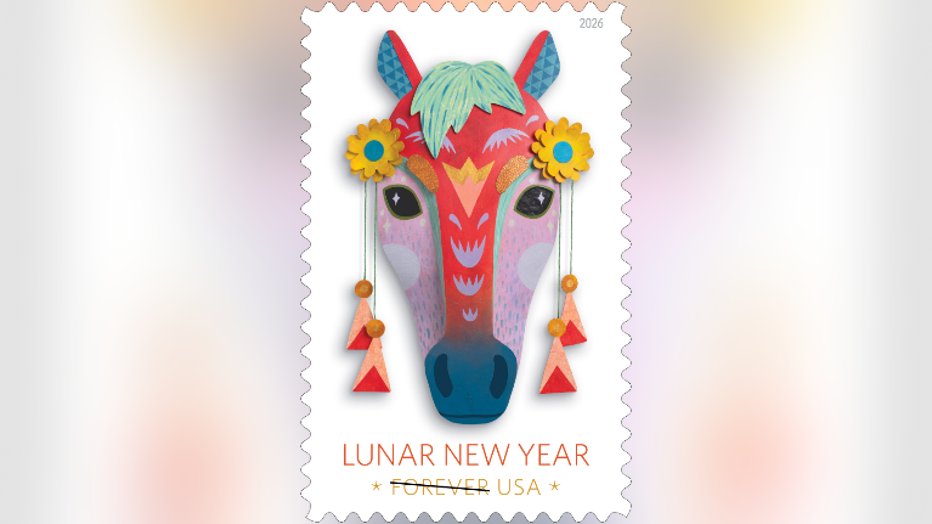
On February 3, 2026, as the first-day-of-issue bell rings in Houston, Texas, the United States Postal Service (USPS) will officially unveil the seventh stamp in the third generation of the Chinese Zodiac series— the Year of the Horse.
These vibrant and visually striking “Forever Stamps” are not only the latest masterpiece from renowned artist Camille Chew’s “Paper Masks” series, but also a crucial piece in the puzzle of Chinese zodiac stamp collecting. For collectors striving to build a complete zodiac collection, and investors seeking inflation-hedging assets, the release of this stamp is an unmissable signal.
This article will provide an in-depth analysis from a professional perspective of the artistic essence of the 2026 Year of the Horse stamps, the lineage of the USPS Zodiac series, and how to use wise strategies (such as utilizing discount channels) for asset allocation to make these forever stamps a timeless highlight in your collection.
I. Inheritance and Innovation: The Three Generations of USPS Zodiac Stamps
To understand the collectible value of the 2026 Year of the Horse stamp, we must examine it within the context of the United States Postal Service’s more than 30-year history of issuing zodiac stamps. It is more than just a stamp; it is a continuation of a grand artistic project.
1. From Ink Painting to Paper Art: Aesthetic Evolution Across Centuries
Since 1992, the USPS has issued three generations of zodiac stamps with distinct styles, each designed by a different master artist, representing the aesthetic preferences of that era:
- First generation (1992-2004): Designed by Clarence Lee. This generation adopted a traditional paper-cutting style combined with calligraphy, with a simple and elegant style, and is the first work for many senior collectors.
- The second generation (2008-2019): designed by Kam Mak. This generation shifted to hyperrealism, focusing on objects related to the Lunar New Year (such as lanterns, daffodils, and red envelopes), with a more delicate and microscopic perspective.
- The third generation (2020-2031): led by Camille Chew. This is the era we live in now. Chew boldly abandoned traditional realism and turned to a fantastical “3D paper mask” style.
2. The pivotal role of the “seventh son”
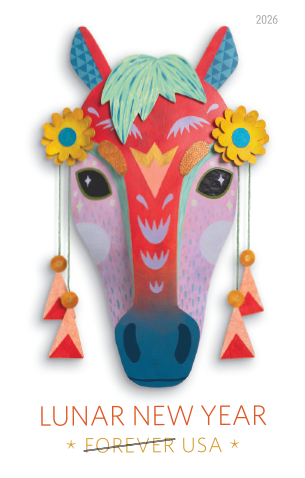
the seventh in Camille Chew’s third-generation series (the previous six being the Rat, Ox, Tiger, Rabbit, Dragon, and Snake). In philatelic psychology, once a series is halfway through, collectors’ “completionist urge” is strongly stimulated. Those who already own the first six “forever” stamps will see this Year of the Horse stamp as a must-have. Entering the market at this time not only allows them to enjoy the current hype but also boosts the secondary market value of stamps from previous years.
II. Deconstructing Camille Chew’s Art Labyrinth: When Folklore Meets Modern Composition
The 2026 Year of the Horse stamps have received high praise in the art world thanks to the unique “mixed media” approach of their creator, Camille Chew. She is not painting stamps, but “building” them.
1. The Alchemy of Craftsmanship: From Two-Dimensional to Three-Dimensional
Camille Chew’s creative process was extremely complex, which gives these forever stamps a unique and unreplicable quality:
- Step 1: Handprints and dyeing. She first handprints the paper, creating unique textures and shades.
- Step Two: Precision Engineering. Like an architect, she cut, scored, and folded the paper. The nose, ears, and mane of the Year of the Horse mask are all three-dimensional structures built through precise geometric folding.
- Step 3: Decoration and Totems. She hand-painted details with acrylic paint and added paper elements such as tassels and flowers. The pulp layer on the back of the mask adds a sense of weight.
- Step Four: Capturing the Light and Shadow. Finally, professional photographer Sally Andersen-Bruce took the final shot under studio lights. The shadows we see on the stamps are not drawn, but rather physical shadows created by real light projected onto the three-dimensional paper sculpture.
2. A Semiotic Interpretation of the Horse Year Mask
Chew used a lot of symbolism on this Year of the Horse forever stamp:
- Color psychology: The mask features vibrant red, gold, and purple as its main colors. Red symbolizes good luck and warding off evil, gold symbolizes wealth, and purple suggests auspiciousness, like “purple air coming from the east.”
- Totem Fusion: While the mask’s design is inspired by traditional lion dances and folk paper-cutting, Chew incorporates the geometric segmentation of modern illustration. This “Retro-Futurism” style allows the stamp to appeal to both traditional elders and the aesthetic sensibilities of Gen Z collectors.
III. The Financial Attributes of “Forever”: Paper Gold in an Era of Inflation
For investors, stripping away the artistic veneer, Forever Stamps are essentially a financial instrument with the properties of an “inflation hedge.”
1. Locked-in Purchasing Power Parity
The word “Forever” represents the United States Postal Service’s strongest economic commitment. It means that this stamp will forever be valid at the current 1-ounce First-Class Mail rate.
Historical data: Over the past 20 years, the increase in U.S. postage rates has often outpaced the CPI (Consumer Price Index).
Investment rationale: When you purchase Year of the Horse forever stamps in bulk at current prices in 2026, you are effectively locking in future logistics costs. By 2030 or 2035, regardless of how much postage increases, the value of your assets will automatically appreciate.
2. Premium Potential of Zodiac-Themed Products
While all forever stamps have the same face value, in the secondary collectibles market, the subject matter determines the premium. The Lunar New Year series, due to its large Asian audience and global cultural influence, has consistently been a “blue-chip” product of the USPS. Historical data shows that well-preserved, perfect-condition full sheets of Lunar New Year stamps often command higher market prices than stamps with ordinary designs several years after their release.
IV. A Practical Guide to Collecting: How to Buy Like an Expert?
Now that the collectible value has been identified, the next step is to implement a purchasing strategy. For the Year of the Horse stamps, we recommend a “pyramid” collecting structure.
1. Pinnacle: Mint Condition Sheets
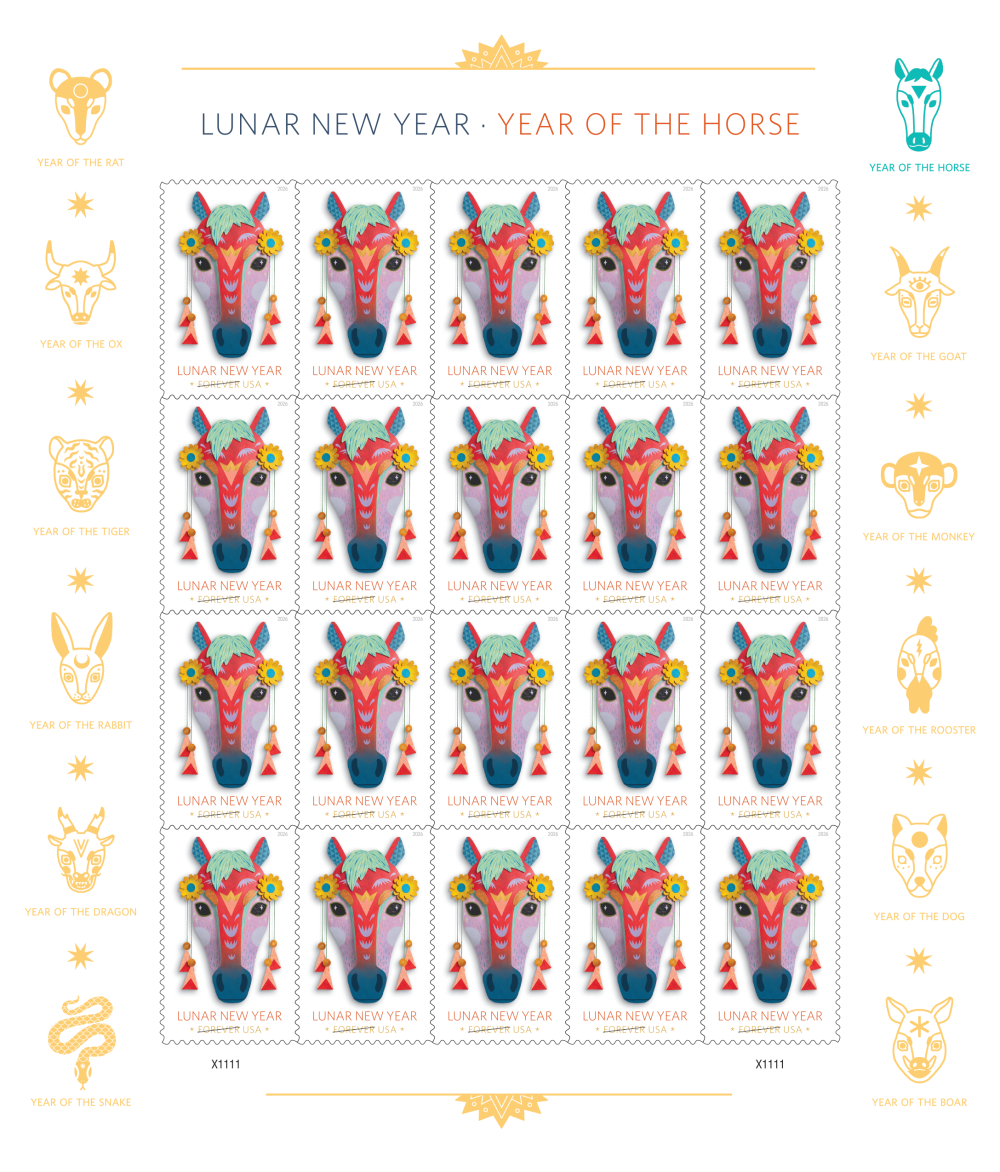
For true collectors, it is recommended to purchase 5-10 sheets of the Year of the Horse stamps and keep them in their original packaging.
- Handling details: Do not tear or fold. Check that the adhesive is intact and the perforations are clear. Place these complete sheets of stamps in acid-free archival safe mounts and store them in a dark, temperature-controlled environment. These are your future “assets”.
2. Tower Base: Bulk Usage
For businesses or individuals who need to send a large volume of mail, the Year of the Horse stamps are an excellent example of attractive postage. However, the key here is to reduce costs.
Why seek a discount channel? The USPS website sells them for $15.60 per sheet. If you needed to buy 100 sheets for business gifts or mailing, the cost would be as high as $1560. Through our independent website, utilizing our optimized supply chain (corporate inventory clearance, bulk buybacks), you can purchase the exact same authentic forever stamps at a significant discount.
Authenticity Guarantee: We understand the discerning tastes of collectors regarding condition and authenticity. We promise that every set of Year of the Horse stamps you receive originates from the legitimate secondary market, undergoes rigorous fluorescent anti-counterfeiting testing, and is not only suitable for collection but also safe to pass through the USPS automated sorting system.
V. The Artistic Director’s Perspective: Antonio Alcalá’s Modern Vision
To understand the soul of this stamp set, we cannot ignore the mastermind behind it—USPS Art Director Antonio Alcalá. Alcalá once stated that the USPS’s goal is to make stamps “miniature modern art galleries.” When choosing Camille Chew, he valued her ability to transform “folklore” into “Pop Art.” Collecting these Year of the Horse forever stamps is, in effect, collecting a significant shift in USPS art guidelines—from “recording history” to “creating art.” This positioning in art history will add even more academic value to these stamps over time.
VI. 2026 Issuance Parameters Memorandum
To ensure you don’t miss out on the initial launch bonus, please record the following key information:
- Release date: February 3, 2026.
- First launch location: Houston, Texas (TX 77201).
- SKU number: 487904.
- Format: 20 sheets/sheet, self-adhesive.
- Series Status: The 7th piece in the third generation of the Chinese Zodiac series.
VII. Conclusion: Galloping on horseback within a small space
In Eastern culture, the horse represents the “spirit of the dragon-horse” and “leading the way.” In Western culture, it symbolizes freedom and conquest. The 2026 Year of the Horse forever stamps perfectly blend these two spirits. They are not only a showcase of Camille Chew’s exquisite paper art, but also a milestone in the USPS Zodiac series, and a solid shield for investors against inflation.
Whether you’re looking to complete your zodiac collection or seeking a culturally significant business gift, this stamp is the perfect choice.
Don’t wait for a notice of postage increases, nor for the premium price after a limited edition becomes out of print. The opportunity now is fleeting, like a galloping horse.
Visit our discount section to add this sensual masterpiece to your private museum at the most reasonable price.